


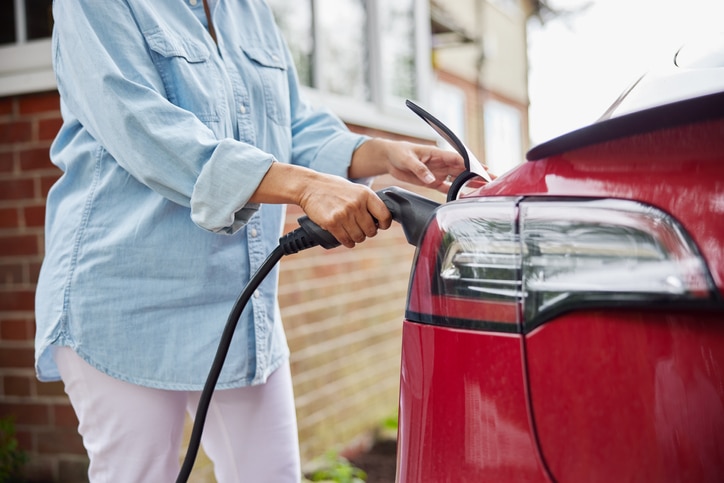
A large part of owning an electric vehicle is knowing how to keep it charged. It can take hours to fully charge an EV. It adds extra steps to planning road trips or even regular commutes to your job. Learn more about charging your electric vehicle.
The Three Types of EV Charging
There are three levels of EV charging. Level 1 charging is technically the easiest and most convenient type of EV charging, if only because you only need a standard 120V outlet and the charging cable that comes with most EVs. The only problem with this is that it can take over 24 hours to fully charge a large battery. It’s fine if you charge it overnight and only drive short distances, but you’ll need another charging method if you regularly make lengthy commutes.
Level 2 charging is probably what most people imagine when they think of home EV charging. It provides you with a range of 12 to 40 miles per hour of charging, making it ideal if you use your EV for regular commutes. It does require special equipment and installation, which can cost hundreds of dollars up front, but it may be worth the cost if you do a fair amount of driving.
Level 3 or DC fast charging is the fastest EV charging method. It isn’t available for home charging due to the high voltage and cost involved, but it can charge most EVs to 80 percent in 20 to 45 minutes. Level 3 chargers are what you see at supermarkets, highway rest stops, and any public charging stations you might pass on the road. Level 3 charging is incredibly convenient if you need a quick recharge while on a road trip, but it is expensive and will lower your battery’s overall lifespan if you rely on it too often.
Efficient Steps to EV Charging
If you charge your EV at home, simply park your vehicle close enough to your charging station or outlet, open the charging port door, and insert the charger connector. Wait a few seconds to make sure charging begins. This might be indicated by exterior lights, an audible chime, or an indicator on the vehicle’s dashboard display. There’s no need to unplug the charger when charging is complete, but it’s best to only charge your vehicle to 80 percent unless you’re planning a longer drive.
For DC fast charging, first make sure that you have a DC adapter for your vehicle or that your vehicle can safely accept DC fast charging. Pull up to a public charging station, connect the charger to your port, and follow the steps to pay using a credit card or a smartphone app. Your vehicle should be properly charged within 45 minutes.
Charging an electric vehicle isn’t that difficult. For the most part, it’s as simple as plugging it into the proper outlet and waiting. Once you get used to the time it takes to charge, your vehicle will be ready to go when you need it. If you live in Temple, TX or a surrounding area and need EV charger services, make your first call to Amos Home Services.